Hedgehogs and Leadership

Use the Hedgehog Concept to Burrow into One BIG Idea for Your Business

What?

Hedgehogs, what are they? They aren’t just small creatures with spines on their back. Hedgehogs are the simple thinkers of the world. They take in complex ideas and simplify them to more manageable tasks. On the other hand, there are foxes. Foxes are the over thinkers. They see complex problems and seem to be very scatterbrained and take on multiple angles at once. (Collins, 2001, p. 91) Be a hedgehog.

So What?

            Why does understanding our world point of view matter? Well, simply put, it’s how we better interact with the people around us, but also how we interact with the world. Mark Bragg from Medium states “You begin to realize that there is more than one way to view a problem, which means there is probably more than one solution…” (Bragg, 2019) You may be asking yourself; doesn’t this contradict being a hedgehog? Isn’t viewing the world at multiple angles make me a fox? Not necessarily. Mark continues with “…Complex problems can often become clear and what you think are simple solutions reveal a complexity you hadn’t thought of.” (Bragg, 2019) As a hedgehog thinker you are to take complex problems and not make the problem simple, but rather make the solution and the path to the solution simple. The hedgehog concept is also about finding what you’re good at and sticking to it. Mindtools states 3 steps you can take to find your or your organizations hedgehog concept. “Understanding what your people are truly passionate about, identifying what the organization does better than anyone else, determining where it’s good at generating revenue.” (The Mind Tools Content Team) These 3 steps can help you take a bunch of ideas and skills and melt them down to one great one.

Now What

            How can I take this hedgehog concept and incorporate into my life? How can I create my own personal hedgehog concept? Its very similar to how you would with an organization. Ashly Guberman from Primary Goals talks about finding our purpose, authenticity, and career. In more defined terms, what you’re passionate about, what you’re great at, and what drives your economic engine. (Guberman, 2016). How will I take these concepts into my life? I am a creator. I post videos on Tiktok. I started on the app in 2018, creating comedic videos for fun. As the app has grown and same with my page, I have found it hard to keep myself relevant on the app. While I do have 1.1 million followers, playing with an algorithm can be hard. After typing this paper, I hope to implement the hedgehog concept into my online career. I hope to continue to create comedic videos but to find a niche that I love but also that continues with relevancy over time. While applying a niche can be hard on social media, with trends continuously changing every day. I hope to find my found niche in these trends. Being a hedgehog can be hard while being a public figure, there are foxes who will find ways to play the algorithm. But while the fox can figure out the algorithm, it creates sloppy work for a pretty penny. While this works in the short run, in the long run the hedgehog is doing great, passion filled work that with persistence that will grow exponentially and create more than just a pretty penny overtime. I hope to continue to grow and be a hedgehog on social media.

References:

Bragg, M. (2019, July 4). Perspective and leadership. Medium. Retrieved September 28, 2021, from https://medium.com/swlh/perspective-and-leadership-cd0dce5d50f1.

 Collins, J. (2001). Good to Great: Why some companies make the leap … and others don’t (1st ed.). New York, NY: HarperBusiness.

Guberman, A. (2016, March 8). A personal hedgehog concept. Primary Goals. Retrieved September 28, 2021, from https://primarygoals.com/personal-hedgehog-concept/.

The Mind Tools Content Team. (n.d.). The hedgehog concept: Using the power of simplicity to succeed. Strategy Tools From MindTools.com. Retrieved September 28, 2021, from https://www.mindtools.com/pages/article/hedgehog-concept.htm.

Self-Awareness

What is self-awareness? And how can you cultivate it?

What?

Understanding yourself as a person is vital in being a leader. Knowing how you best communicate and interact with the people around you can make a world of difference when leading. Self-awareness is similar to humility, which I talked about in my previous blog. According to Indeed, “Self-awareness in leadership is an understanding of how your personality traits, habits and abilities affect your interactions with the people around you, particularly in the workplace.” (“The Importance of Self Awareness in Leadership”, 2021). I feel more can be added to this definition. I feel self-awareness is also linked to your knowledge and experience. Taking humility into play with your self-awareness can provide you with a flow of construction within yourself and others.

So What?

Why should we be self-aware as leaders? Chinwe Esimai from Forbes states that “Self-awareness is empowering because it arms you with knowledge and enables you to make better choices — to change or grow.” (Esimai, 2018). Changing and growing as leaders is what makes us stronger and better suited for our teams. Morphing with your peers to work with them, rather than against them can benefit your team’s communication, work ethic, productivity and much more. This changing and growing extends outside of specific forms of leadership (i.e. sports captain, president, CEO, manager, etc.). Taking new emotional/self-awareness/intelligence into your one-on-one relationships and life will greatly improve your interpersonal skills. 

Now What?

 There are many ways in order to become self-aware and many websites that give you tips — one being the Harvard Business Review. It states five ways: meditate, write down your key plans and priorities, take psychometric tests, ask trusted friends, and get regular feedback at work. (Tjan, 2015) While these are all great suggestions, I believe becoming self-aware is more of a personal journey and not a one-size-fits-all deal. For myself, I started becoming more self-aware in college. College was the first time in my life where I could sit back and form my own opinions separate from my parents. While my parents did influence many of my opinions, that didn’t stop college from skewing some of them. Another way I became more self-aware was creating new friendships and having multiple different types of friend groups. When I was in high school, I caught myself only surrounding myself with people who shared the same opinions as me which led me to be single minded. It made me mad and fight other people for having differing opinions from me. I learned over time that listening, viewing the world from their point of view, and either taking or leaving that opinion would leave no hard feelings, at least on my end. College has allowed me to take in new information and opinions with more clarity and level-headedness. I believe I have greatly worked on my self-awareness. That being said, I know I still have a long way to go, as do all humans who hope to evolve constantly for the greater good. I strive to always find more ways to improve myself, not only as a rising leader in the world, but also as a person who is about to graduate and join society fully. Virginia Tech has given me a lot of viable life lessons, but there is definitely more education on the table once I join the workforce. 

References:

Esimai, C. (2018, February 16). Great leadership starts with self-awareness. Forbes. Retrieved September 21, 2021, from https://www.forbes.com/sites/ellevate/2018/02/15/self-awareness-being-more-of-what-makes-you-great/?sh=2b46140f40dd. 

The Importance of Self Awareness in Leadership. Indeed Career Guide. (2021, March 10). Retrieved September 21, 2021, from https://www.indeed.com/career-advice/career-development/self-awareness-in-leadership. 

Tjan, A. K. (2015, February 11). 5 ways to become more self-aware. Harvard Business Review. Retrieved September 21, 2021, from https://hbr.org/2015/02/5-ways-to-become-more-self-aware. 

Humility in Leadership

Humility in Leadership | Julian Stodd's Learning Blog

What?

Having humility as a leader within your organization is vital. Knowing your level of knowledge as a leader and being able to let others in to educate you can make your organization thrive. However, humility goes far beyond your level of knowledge and letting others in. Assessment Systems states that “Humility is broadly defined as self-awareness, appreciating others’ strengths and contribution and openness to new ideas and feedback regarding one’s performance.” (Assessment Systems, 2018). Humble leaders put their organization and their collaborators at or above the level they are as a leader. The leader creates a safe and respectful place to work where creativity and ideas flourish.

So What?

Why should we care about our humbleness as leaders? Simply put by Medium, humility makes you a better person. Humility allows you to better take in criticism, new ideas, and perspectives. It also helps create positive influence, patience, and making people comfortable around you (Burrison, 2020). These skills can help you as a leader lead your organization better but can also make your co-creators feel heard, respected, and more inclined to be involved in projects. Smart Brief says that “Humility is a superpower in leadership. It is about knowing what you don’t know and having the curiosity, authenticity and confidence to put that out there so that you and your team can find the answers. The ultimate reward rests both in the value of information you might not otherwise get and in the trust that it fosters between you and the people you lead.” (Smart Brief, 2021).

Now What?

As a rising leader in the world, taking humility into account wasn’t on my forethough. There’s a reason for this. As I’ve gone through high school and college observing different leaders and how their leaders lead them, I’ve noticed that correcting or adding your idea can be seen as “stepping on someone’s toes.” I find this to be disgraceful. There’s a good example of this that stuck out to me when we were learning about humility in class. When I was in high school, I was captain of my color guard team my junior year, this was taken away from me my senior year due to nepotism on the board. One day during my senior year fall, we were going over drill and choreography. I notice that our line was not straight. I simply said to the group of people “hey can we dress (making sure everyone is where they are supposed to be) this line?”. Right then and there the coach of the guard snapped at me for making this suggestion saying, “You are not a captain anymore, you cannot make corrections”. This was heartbreaking to me. I felt like I was inferior to my peers merely because I simply did not have a title. I had as much knowledge, possibly more due to my position on the field yet was undermined and shamed for saying something that could help my team. This continued throughout the semester till I quit because the captains were being rude, throwing things at me angrily, and simply not taking in my knowledge. I believe if someone feels their toes are being stepped on then they merely lack the emotional maturity to take in criticism. I take my past experiences with me to help make myself a better leader, but I also take in new knowledge from my peers, professors, and leaders in my life.

References:

Burriston, N. (2020, June 22). 11 reasons to be more humble. Medium. https://medium.com/age-of-awareness/11-reasons-to-be-more-humble-1f4da497f34c.

Humility in leadership (Dr. Robert Hogan interview). Assessment Systems. (2018, October 28). https://asystems.as/the-importance-of-humility-in-leadership-interview-with-dr-robert-hogan/.

Humility: A leadership superpower. SmartBrief. (2021, April 15). https://www.smartbrief.com/original/2021/04/humility-leadership-superpower.

The Evolution of Leadership

Building Effective Leadership Skills: Why We Do It + How You Can Too |  Hotjar Blog

What? Leadership and its definition have changed many times over history. That evolution was made with the help of debunking myths, changes in education, and of course many other things. Many of these myths are described by Forbes. “Great leaders are born, not made”, “Great leaders are always in the spotlight.”, “Leaders have all the answers.”, and “Leaders work smarter, not harder.” (Walter) These old standards made leadership black-and-white or a one-size-fits-all deal. We have learned over the years that these myths are not true in the slightest. Leadership is a learned skill. Yes, you can be born with leadership tendencies, but this does not make you a leader. Leaders Excellence states, “It has often been said, “Great leaders are born, not made.” Trait Theory takes this saying literally. If you have the ability to lead, you were born with it, with no way to learning those skills. This theory expands on the Great Man Theory by defining what makes great leaders “great.”… under the right circumstances, anyone can rise to a leadership role and be successful based on the leadership style that best matches their personality if they know how to use that ability to properly address the situation at hand. Other leadership skills can indeed be learned, developed, and mastered.” (Leaders Excellence) You have to develop and hone in on your skills to better serve your team, community, company, etc. Leadership changes from organization to organization, group to group, and person to person.

So What? Why should we care about the evolution of leadership? As the world changes, we have to change, grow, and develop with it. Leaders Excellence says, “Leadership itself has not evolved, but our understanding of it has. It is important to understand why very different leadership styles can be effective, why the same leadership techniques will not work in every situation, and which leadership style fits your personality best. Everyone has leadership potential within them, but understanding these concepts will help you maximize your leadership ability.” (Leaders Excellence) Our greater understanding of leadership through the years has led us to be more proactive in the world, allowing us to create solutions to problems easier. Leadership isn’t changing, we are.

Now What? How do we continue the development and understanding of leadership? According to Wrike, there are nine things one can do to continue their leadership skill development. “Practice discipline, take on more projects, learn to follow, develop situational awareness, inspire others, empower your teammates, keep learning, resolve conflicts, be a discerning listener.” (Wrike) Taking the time to develop and evolve yourself as a leader will not only help you but also help your peers and the members of your team. The evolution of leadership is not the change of leadership rather the impact of leadership on us. We are evolving for leadership; we understand it more and more each day. Understanding leadership allows us to understand the world around us more and more. Realizing that leadership is not based on one person’s thoughts, rather on the whole group can help create the most revolutionary ideas.

Reference:

9 ways to develop your leadership skills. Wrike. (2017, September 20). https://www.wrike.com/blog/9-ways-develop-leadership-skills/.

The Evolution of Leadership: Principles, History & Theories. Leaders Excellence. (2019, September 20). https://leadersexcellence.com/the-evolution-of-leadership/.

Walter, E. (2013, October 8). 5 myths of leadership. Forbes. https://www.forbes.com/sites/ekaterinawalter/2013/10/08/5-myths-of-leadership/?sh=663a4372314e.

Doughn’t you want to know what we did today?

This is a hypothetical company created for a class.


Bio: Young Chefs’ Academy is a Blacksburg-based program focused on educating children ages 9-15 on sustainability and healthy eating habits through cooking classes of various difficulties. We use locally-sourced, organic ingredients to create delicious meals while having fun and learning where the food we eat comes from. Stop by to check out what’s cooking or to sign up for classes!

Today’s beginner class of Young Chefs had a blast learning how to make something every kid seems to love: pizza!

PHOTO CREDIT: ANN CATES VIA FACEBOOK

We started by preparing the sauce. The recipe we use is gluten-free, vegan-friendly, and only takes a few minutes. I won’t explain the details in this post, but if you would like the recipe, feel free to comment or send an email asking for it.

Unfortunately, it takes more time than we have during a class for dough to rise, so our students used dough that we had made earlier. However, we still taught them the steps, and gave them a recipe to take home so that they can make their own dough at a later time. While going over the steps we talked about the importance of yeast; you should’ve seen some of their faces when they learned that yeast are living things and that they are the reason dough rises! 

Our chefs had a lot of fun flattening out their dough ball and making it the right shape. Some didn’t stretch their dough enough, and some stretched it so thin they made a hole, but everyone mastered the technique eventually.

When all participants were ready to move on, we spread the sauce we made earlier, and then we discussed other healthy, sustainable options for toppings. At Young Chefs’ Academy, we use products from a local dairy farmer and purchase all produce from various organic farmers. 

We always suggest that our chefs and their families try to make more sustainable eating choices. 

Staff helped pop the finished pizzas into the oven while our chefs—somewhat—patiently waited for the timer to go off. They all counted down the last five seconds, excited to see their creations. At the end of class, the room was filled with a delicious aroma, happy smiles, and lots of positive “Mmm Mmm”s. 

Stay tuned to find out what other cheesy treat we’re making next class!

Easy Strawberry Shortcake

This is a hypothetical company created for a class.


Bio: Young Chefs’ Academy is a Blacksburg-based program focused on educating children ages 9-15 on sustainability and healthy eating habits through cooking classes of various difficulties. We use locally-sourced, organic ingredients to create delicious meals while having fun and learning where the food we eat comes from. Stop by to check out what’s cooking or to sign up for classes!

With quarantine as a new reality, many of us have developed a sweet tooth, and are craving something easy and delicious to make. This easy strawberry shortcake only takes a few simple ingredients that you might already have; it only takes a short amount of time to complete! This is a recipe was used in one of our courses. It’s a very simple, sweet, and rewarding recipe for anyone who tries it—yum!

Ingredients:

  • Strawberries
  • Sugar
  • Heavy whipping cream OR premade whipped cream
  • Vanilla
  • Frozen or canned biscuits

How to make it:

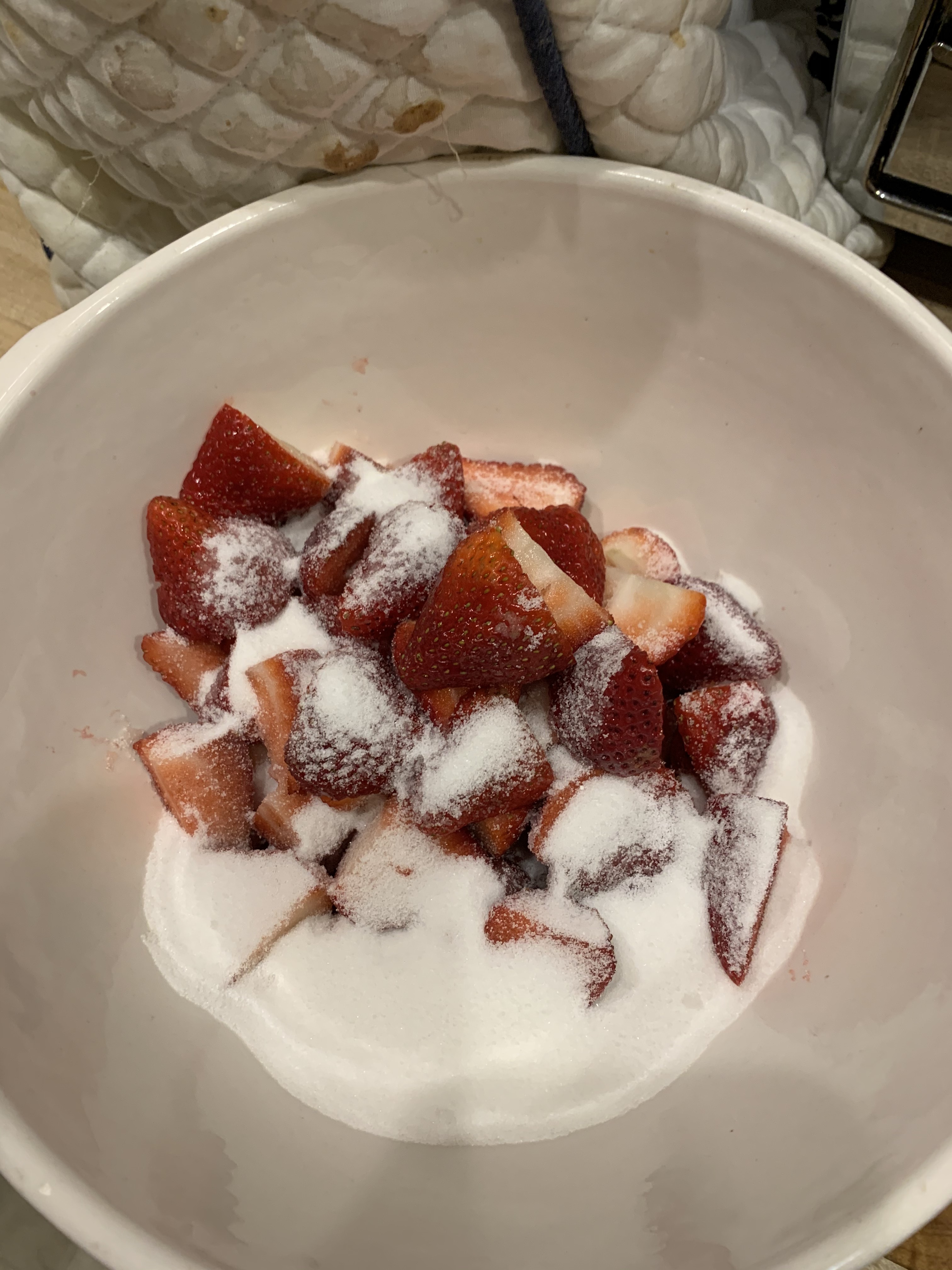
Step 1: A few hours before you plan to serve your strawberry shortcakes, take your washed strawberries, cut off the leaves, and cut the strawberries in half. Then, add them to a bowl with your sugar, cover with plastic wrap, and routinely stir them. Once your strawberries have sat out for a few hours, they should be much softer and sweeter.

Step 2: Take your heavy whipping cream, and add it to a chilled bowl. If you have a stand mixer, be sure to chill the beater with the bowl. Either by hand using a whisk or with a stand mixer, beat your heavy whipping cream, with a splash of vanilla for flavor, until you have peaks.

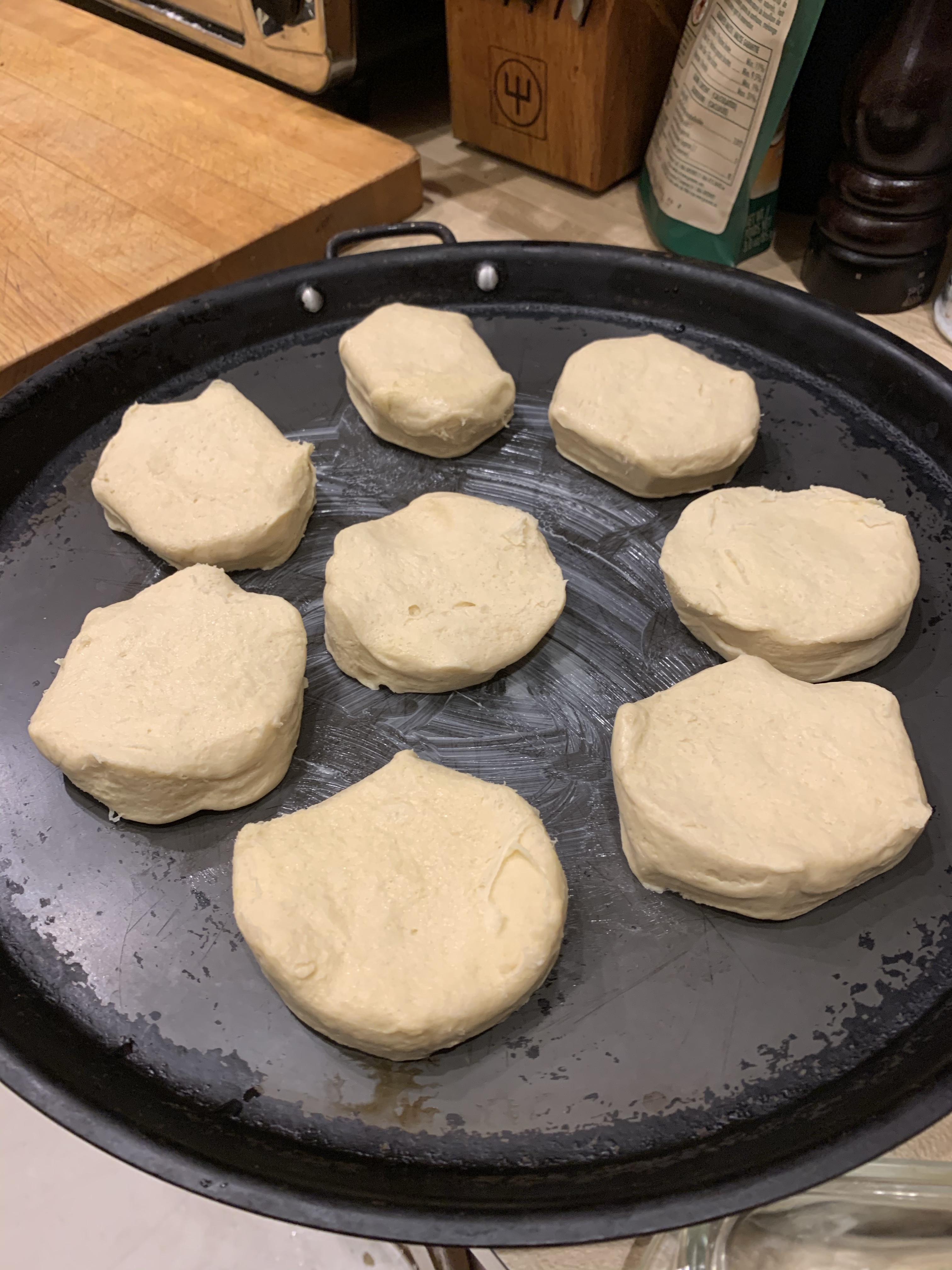
Step 3: Bake your biscuits according to the package’s instructions.

Step 4: Take your baked biscuit and spit in half, add your sweetened strawberries on top of each half biscuit, then add a dollop of whip cream on top.

Forming a New Team

people sitting on chair in front of table while holding pens during daytime

What? When forming a new team, every team will go through many different phases in order to become more comfortable with one another and see who is strongest in what areas. There are also many ways of forming a team, according to MIT, there are six different items to follow. “1. Mission:  A mission statement can provide powerful documentation about the team’s purpose. 2. Goals: “Goals should be something worth striving for — important results that the team can provide for the organization. The best goals are S-M-A-R-T goals: Specific, Measurable, Achievable, Relevant and Time-bound. 3. Roles and Responsibilities: It’s particularly important in a team environment that team members know what is expected of each of them. Without these expectations, members can’t develop mutual accountability or trust in the team. When a team’s expectations are clear and members meet (or exceed) expectations, trust and an increased sense of “teamness” are natural by-products. 4. Ground Rules: Ground rules are guidelines for specific behaviors. Teams don’t need a lot of ground rules to work together well, but everyone on the team should agree to the ground rules and share responsibility for ensuring that they are followed. 5. Decision making: A clear decision-making model describes who makes the decision and how others will be involved. 6. Effective Group Process: Communication, Mutual accountability, and Appropriate self-evaluation.” (MIT).

So What? Why is making a good team so important? To get projects done? Be able to collaborate well? Well, according to Forbes, team bonding is vital to having a good team: “It builds trust, mitigates conflict, encourages communication, and increases collaboration. Effective team building means more engaged employees, which is good for company culture and boosting the bottom line. It can also be adventurous and enjoyable if you do it with a little pizzazz.” (Forbes). So, with all this team building make my team amazing? Well, it depends… When you have a team, especially a new one, there are some amazing words that will help consolidate what to work on. According to my Team Leadership professor, Dr. Rateau, and Levi, say that communication and trust are the best things you can work off. Communication is simple, if your team can collaborate and express their thoughts and ideas freely you have excellent communication; which brings me to trust, trust is a part of communication, if your team feels like they cannot talk to one another with out worry of offending, correcting, or even helping someone, there’s a problem, make sure your team trusts one another.

Now What? How do I create this amazing theoretical team? Well it all depends on who you are working with, culture, location, what the team is for, and many other points that can change how your team functions. Follow the guide from MIT, and make sure you are focusing on communication and trust. While there are many things you can do to make your team the best, but one way I particularly like is from, yet again, Forbes: “1. Build trust and respect. Nurture a team-oriented environment based on trust and respect, without which there will only be limited success. 2. Be true to your word. If you demand high productivity and quality work, you’d better be as good as your word. You get what you give. If you promise to do something, be sure you will fulfill it. When team members notice that you are a reliable person, they will emulate your behavior. 3. Organize a meeting for all employees. If you want to improve teamwork, help people get to know each other better. Organize in-person meetings for all workers (all teams) at least once a year — more often if at all possible. Informal conversations bring people together and warm up human relationships. 4. Take advantage of conflict. There are no teams exempt from occasional misunderstandings. Somewhere, somehow, conflict will show up. When confrontation between employees gets out of a hand in a startup, the CEO must face it. Don’t complicate the situation by deciding what is good or bad. Listen to all sides carefully and then talk to other team members who observed the quarrel. Brainstorming solutions favorable for both sides may even result in ideas that would never have come to mind in without the conflict. 5. Make hiring a team effort. If you want to hire a new person, discuss this with your team. Let your team members talk with candidate because they will work together and it’s important this person fit into the team.” (Forbes)

References:

Council, Y. E. (2014, July 8). Five Ways To Build An Effective Team. Retrieved from https://www.forbes.com/sites/theyec/2013/06/07/five-ways-to-build-an-effective-team/#712de7a1e0ad

Important Steps when Building a new Team. (n.d.). Retrieved from https://hr.mit.edu/learning-topics/teams/articles/new-team

Scudamore, B. (2016, March 9). Why Team Building Is The Most Important Investment You’ll Make. Retrieved from https://www.forbes.com/sites/brianscudamore/2016/03/09/why-team-building-is-the-most-important-investment-youll-make/#803d040617fc

Diversity in the workplace

Why Diversity and Inclusion Driving Innovation is a Matter of Life ...

What?

Diversity when looking at teams comes from different backgrounds. For example, demographic, psychological, and or organizational backgrounds. “Research reveals that the various effects of this diversity on teams is dependent on how the research is conducted, the type of diversity examined, and the type of tasks performed. In most cases, diversity is a benefit once a team learns how to create a context that supports diversity. A team with diverse members performs better on decision making, problem solving, and creativity tasks.” (Levi). With that being said, not all things about diversity are positive of course. “Diversity in a team can lead to problems caused by misperceptions about others and competition among subgroups. These problems disrupt team communication and reduce the ability of the team to fully use its resources.” (Levi).

So What?

Now with seeing the negatives of diversity, is it even worth it? Of course, it is! “Diversity is at the core of teamwork. If people have identical knowledge, skills, or perspectives, then there is little reason to organize them into teams, and is simpler to just have a supervisor tell the individuals what to do.” (Levi). Having diversity is vital when working in teams. Diversity helps create new ideas and new solutions, there might be disagreements here and there, “but actions can be taken to help teams improve relations among their members in order to gain the benefits of team diversity. “(Levi). As stated by Forbes, “Diversity gives you access to a greater range of talent, not just the talent that belongs to a particular world-view or ethnicity or some other restricting definition. It helps provide insight into the needs and motivations of all of your client or customer base, rather than just a small part of it. And, potentially, as McKinsey & Co and a host of other highly credible researchers have shown, it makes your organization more effective, more successful, more profitable.” (Forbes).

Now What?

How do we implement diversity into the workplace if it’s so beneficial? Now there are many ways of implementation in the workplace, according to InsideHR, diversity can be set up with five key steps. “1. Train and sensitize your employees…In research conducted by AHRI in 2014, views and opinions on diversity at the workplace from Australian business leaders were collected and one of the most common opinions was that the middle management and sometimes even the leadership were not completely welcoming and supportive of a diverse work group which makes it challenging to implement any strategy amongst the larger workforce. 2. Understand the various elements of a diverse workgroup and map which one will fit your business DNA…Depending on the nature of your business, the clients involved, and the skills and capabilities required, diversity strategies should be put into place. 3. Don’t diversify for extremely short-term goals like an award – give it time…Diversity takes time. It cannot be included in the DNA of the workforce overnight. One of the most difficult things is change and tougher than that is to sustain the change. 4. Keep it strategic and inclusive…The diversification strategy has to be devised to include all elements and departments of the business…There have to be long-term plans to include this diverse workforce in all elements and hierarchies of the business. 5. Avoid pigeonholing people…Nothing kills a diversity initiate like stereotyping people and cultures. Especially during employee training sessions, special care has to be taken to ensure that the messages and learning imparted is not stereotypical in nature.” (InsideHR). Of course, there are many different ways of implementation and it all revolves around what your company is, who your employees are, and who your customers are. Overall, diversity is important and crucial, meaning,  according to Talent Lyft, having a work force that includes all people of “varying gender, age, religion, race, ethnicity, cultural background, sexual orientation, religion, languages, education, abilities, etc.” (Talent Lyft). 

Refrences:

Discovery, RSM. “Why Workplace Diversity Is So Important, And Why It’s So Hard To Achieve.” Forbes, Forbes Magazine, 22 Aug. 2018, www.forbes.com/sites/rsmdiscovery/2018/08/22/why-workplace-diversity-is-so-important-and-why-its-so-hard-to-achieve/#2ff3b37d3096.

Levi, Daniel. Group Dynamics for Teams. SAGE, 2017.

Nandy, Purnima, et al. “5 Key Steps to Implementing a Successful Diversity Program.” Inside HR, 10 Apr. 2019, www.insidehr.com.au/5-steps-diversity-program/.

Zojceska, Anja. “Top 10 Benefits of Diversity in the Workplace [INFOGRAPHIC INCLUDED].” Blog, 2 Apr. 2020, www.talentlyft.com/en/blog/article/244/top-10-benefits-of-diversity-in-the-workplace-infographic-included.

The Effectiveness and Immersion of a Leader

What? What makes a good leader? Their strength? Their power? Or is it the way a person guides a group to their goal. “Team leadership is a process whereby an individual influences the progress of team members toward attainment of a goal.” (Levi) What a group needs in a leader changes based on the circumstances, and the style of leadership will also change. Now, there are many types of leadership styles and ways those styles are used. Here are 10 common types of leadership from Indeed: Coach, Visionary, Servant, Autocratic, Laissez-faire or hands-off, Democratic, Pacesetter, Transformational, Transactional, and Bureaucratic. Levi also talks, though a survey, about: Directing, Coaching, Supporting and Delegating. All of these are leadership styles, and everyone leads differently. That is why finding the best leader or no leader at all is important to your team.

Ask These 2 Simple Questions to Grow as a Leader | Inc.com

So What? You might be asking yourself “Why is finding the perfect leader for my team so important?”. Finding the perfect leadership is vital when getting tasks done. If a group has an a amazing leader who fits perfectly with the team then the team will get its tasks done, have less conflict and have more productive conversations to resolve issues effectively and efficiently. On the other hand, having a team with a leader who does not fit can cause tension, lack of work ethic, tasks not getting done as efficiently, conflict, and many others. Of course, there is no such thing as the perfect leader or the worse leader but it’s easy to come close to either one. According to the Center for Creative Leadership, the good leaders consistently possess these traits:  Integrity, Ability to delegate, Communication, Self-awareness, Gratitude, Learning agility, Influence, Empathy, Courage, and Respect. These traits are important because “they make up the backbone of leadership across leader levels, industries, and continents. Without these skills, true leadership is impossible.” (Center for Creative Leadership)

Now What? How do I find the perfect leader for my group? Of course, there is no such thing as a “perfect leader” but as the Center for Creative Leadership states: “we believe that leaders are not born but made. We know that leaders are molded through experience, continued study, and adaptation.” (Center for Creative Leadership). Most leaders emerge on their own as teams learn about one another and work together. Management Study HQ states: “A good leader ensures team members’ energy is high to perform the job to their very best. An efficient leader motivates team members by building trust and confidence in them so that, they take a positive approach to the job and the organization at large.” (Management Study HQ). Overall, having a great leader starts with experience and a team. Leaders emerge through learning and emerge in teams over time through work and achieving goals. Having good traits as a leader is also important in that good leaders, according to the Center for Creative Leadership, have the 10 skills: Integrity, Ability to delegate, Communication, Self-awareness, Gratitude, Learning agility, Influence, Empathy, Courage, and Respect. Leadership can be in learned in a classroom, but intrinsically it comes from on the job experience, trial and error.

Refrences:

“10 Common Leadership Styles.” Indeed, 5 Mar. 2020, www.indeed.com/career-advice/career-development/10-common-leadership-styles.

KukrejaI, Sonia. “Importance and Qualities of a Good Leader.” Management Study HQ, 24 Dec. 2018, www.managementstudyhq.com/importance-qualities-good-leader.html.

Levi, Daniel. Group Dynamics for Teams. SAGE, 2017.

“What Are the Characteristics of a Good Leader?: CCL.” Center for Creative Leadership, 19 Mar. 2020, www.ccl.org/blog/characteristics-good-leader/.

Creating the Emotionally Intelligent Team

What? Having an emotionally intelligent team is very important. Emotionally intelligent teams have self-awareness, self-management, and social awareness. Just focusing on these three things can help create an emotionally intelligent team that helps team members focus on themselves as well as their team members. Self-awareness according to Hughes & Terrell is: “You can understand the emotions, needs, and concerns of other people, pick up on emotional cues, feel comfortable socially, and recognize the power dynamics in a group or organization.”. This simply means that you as a team member know how to emotionally navigate your team members and help them when they need it. Self-management according to Hughes & Terrell is: “You’re able to control impulsive feelings and behaviors, manage your emotions in healthy ways, take initiative, follow through on commitments, and adapt to changing circumstances.”. This means that you can control yourself with your emotions, you don’t lash out, and adapt to new point in the team. And lastly, social awareness: “You recognize your own emotions and how they affect your thoughts and behavior, know your strengths and weaknesses, and have self-confidence.”. With social awareness you know how your emotions work, and you know your strengths and weaknesses as a team member and know when and when not to input on specific things. (Hughes & Terrell). According to Psychology Today: “These skills are the building blocks necessary for teams to be high performing.”. Which is true! Having basic building blocks to a team to make them even better than they already were is necessary when trying to build on to the team.

So What? If a team member has self-awareness, self-management, and social awareness, they can just break the ice with having an emotionally intelligent team. Of course, if an emotionally intelligent team is wanted, there are many more steps to it like emotional awareness and nonverbal communication for example, but the main points are to have self-awareness, self-management, and social awareness. According to The Economist, there are seven different ways to have an emotionally intelligent team. Having a ringleader, identifying team members’ strengths and weaknesses, having a spark of passion, building team norms, developing creative ways to manage stress, allowing team members to have a voice, and encouraging employees to work and play together. Being aware of the seven types of emotionally intelligent teams is necessary when it comes to figuring out what kind of team you want to have.

Now What?  When you finally think you have your emotionally intelligent team, The Enterprises Project will tell when to know you have one. Your emotionally intelligent team show empathy, emotionally intelligent teams learn from the process, emotionally intelligent teams ask instead of tell, emotionally intelligent teams inspire people, emotionally intelligent teams give feedback, emotionally intelligent teams seek external viewpoints, emotionally intelligent teams don’t create drama, emotionally intelligent teams regulate emotions, emotionally intelligent teams practice flexibility, and lastly Emotionally intelligent teams care about each other. The Enterprises Project lists all the signs perfectly, emotionally intelligent teams are simple! They are emotionally intelligent! They know how to self-regulate and give each other afloat.

Refrences:

10 Reasons Why Teams Need Emotional Intelligence. http://www.psychologytoday.com/us/blog/leading-emotional-intelligence/201707/10-reasons-why-teams-need-emotional-intelligence. Accessed 5 Mar. 2020.Rampton, John. 

7 Ways to Create Emotionally Intelligent Teams. execed.economist.com/blog/guest-post/7-ways-create-emotionally-intelligent-teams. Accessed 5 Mar. 2020.Smith, DeBorah Sunni. 

10 Signs of Emotionally Intelligent Teams. enterprisersproject.com/article/2019/4/emotional-intelligence-teams-signs.

Hughes, M. & Terrell, J. (2007). The Emotionally Intelligent Team: Understating and Developing the Behaviors of Success. San Francisco, CA: Jossey-Bass

Design a site like this with WordPress.com
Get started